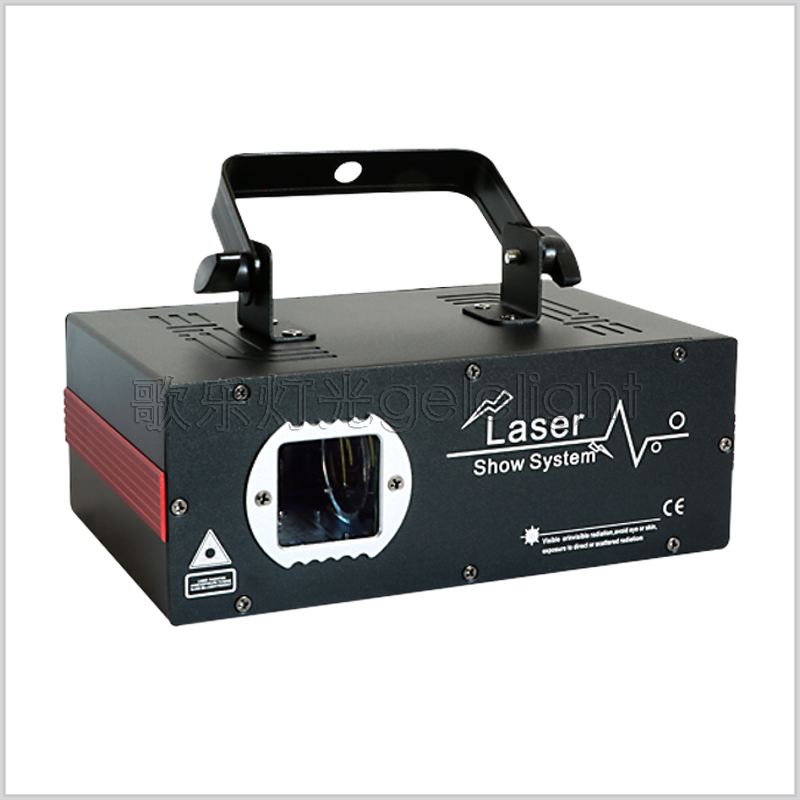
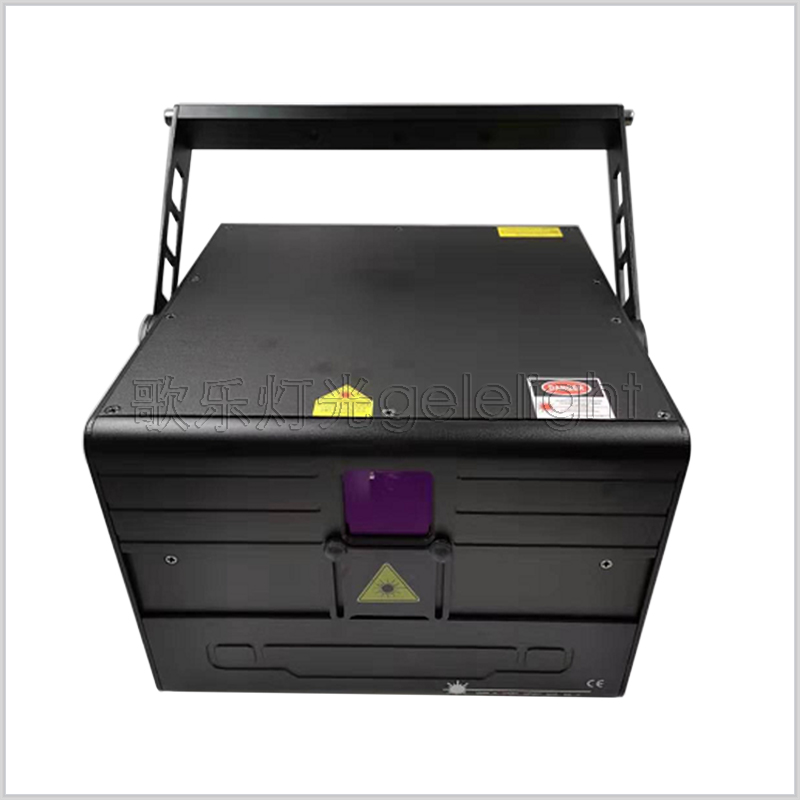
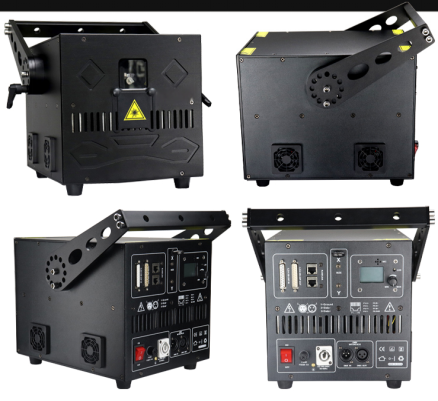
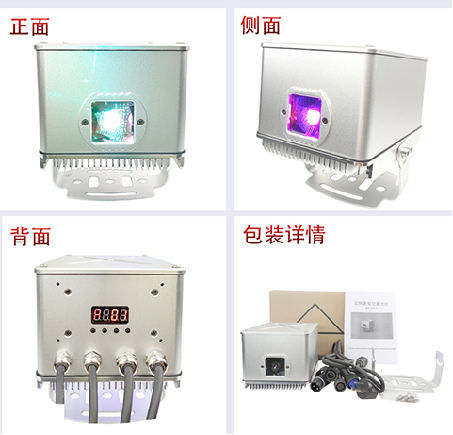
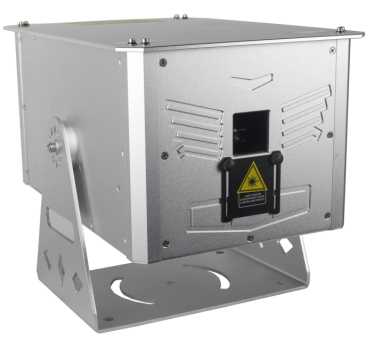
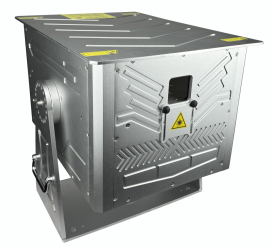
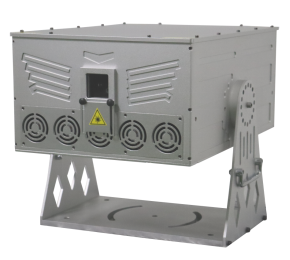
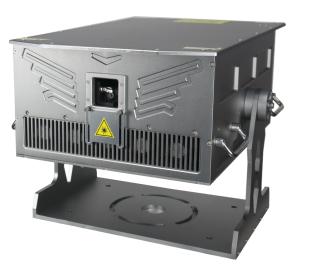
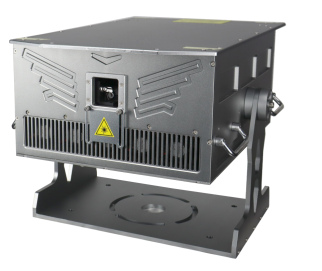
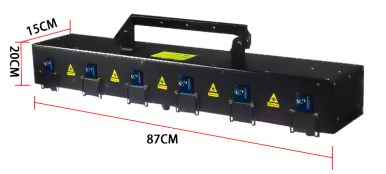
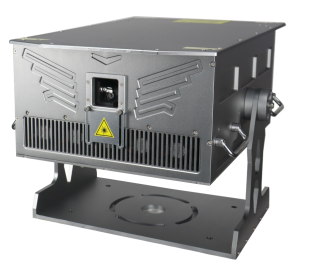
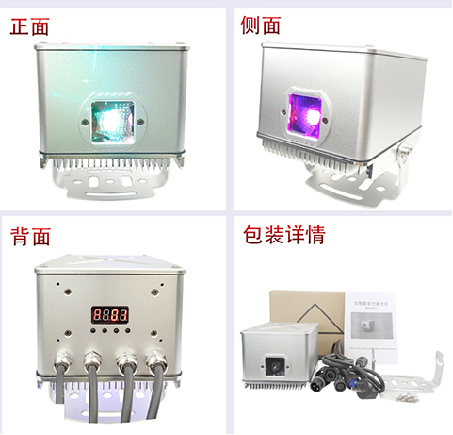
Laser lights
33 products
Sub-categories: Laser lights (non-moving head) (28) · Laser lights (moving head) (9)
Laser lights for stages, scenic areas, building facades and water screens run from 0.3 W to 150 W, and the price gap between two fixtures with the same number printed on them is wider than the gap between the wattages. This page breaks the choice into four decisions — power, indoor or outdoor, control, and what actually drives the price. Every figure here is read from our own product spec sheet and can be checked line by line.
1. Set the power from the throw distance, not from the wattage
The “W” on a laser light is the optical output, not what it draws from the mains. Our own spec sheet states the two separately, and they are far apart:
| Laser output | Fixture power | Scanner | DMX channels | Stated throw | Typical use |
|---|---|---|---|---|---|
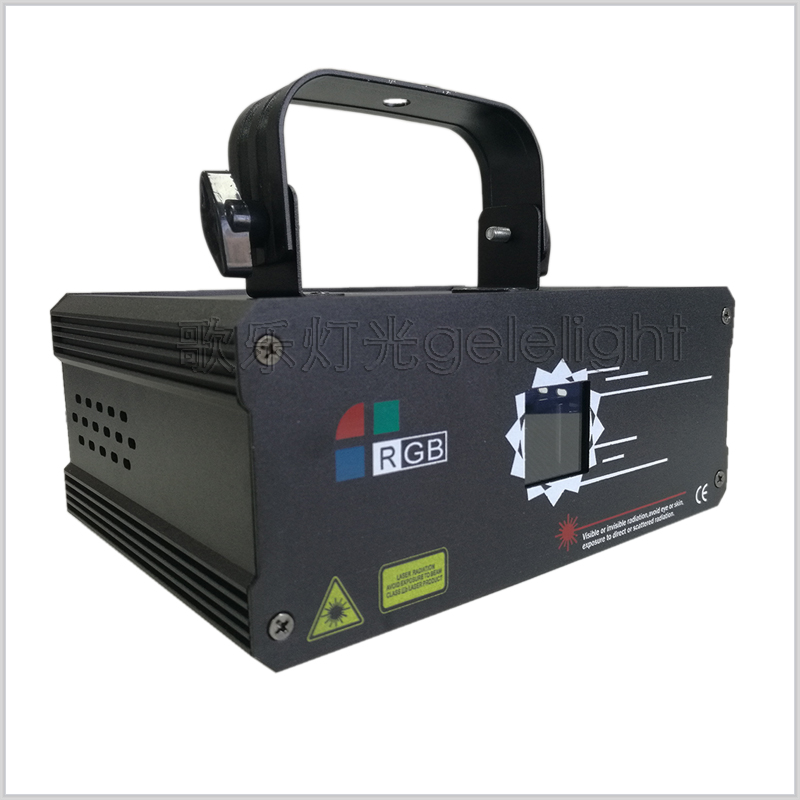
| 2 W (indoor animation) | 60 W | 15 KPPS | 16 | 10–20 m indoors | KTV, private rooms, small bars |
| 5 W (moving head) | 150 W | ±30° galvo angle | 27 | 80 m | Mid-size stages, bars |
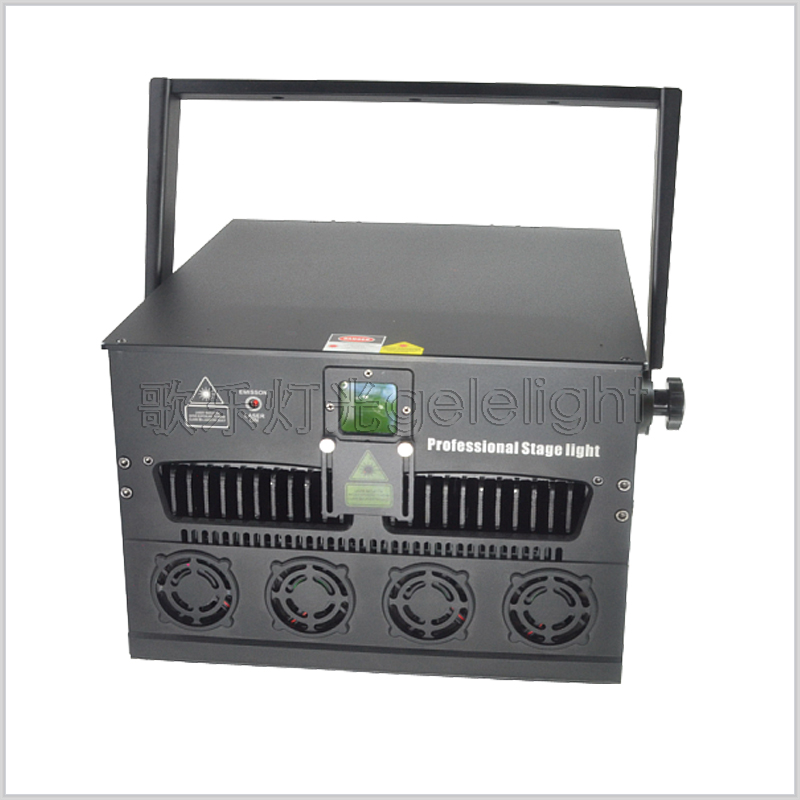
| 10 W (with ILDA) | 120 W | 20 KPPS | 16 / 36 | — | Shows you programme yourself |
| 10 W (moving head) | 200 W | ±30° galvo angle | 27 | 200 m | Live shows, night venues |
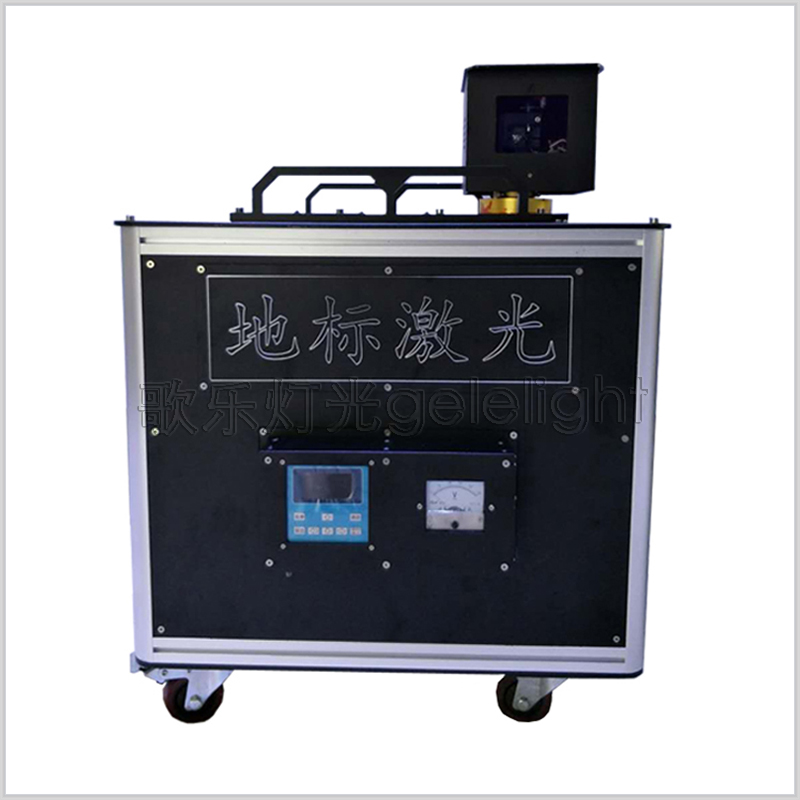
| 20 W (outdoor, waterproof) | 300 W | up to 40,000 PPS | 27 | 1,500 m | Building and bridge facades |
| 30 W (outdoor, waterproof) | 400 W | up to 40,000 PPS | 27 | 2,000 m | Hillsides, landmarks |
| 40 W (outdoor, waterproof) | 500 W | up to 40,000 PPS | 27 | 2,000 m | Landmark beams, long-throw curtains |
Size the electrical supply from the fixture power, not the laser output. A 2 W unit draws 60 W; a 40 W unit draws 500 W — across the seven rows above, the fixture power is 12 to 30 times the laser output. Estimate the circuit from the laser wattage and the breaker will trip on site.
More power is not automatically better. At short throw in a small room, a high-power unit stops reading as a pattern and starts reading as a blob on the wall. Measure the distance first, then pick the wattage.
2. Six things all called “laser light”
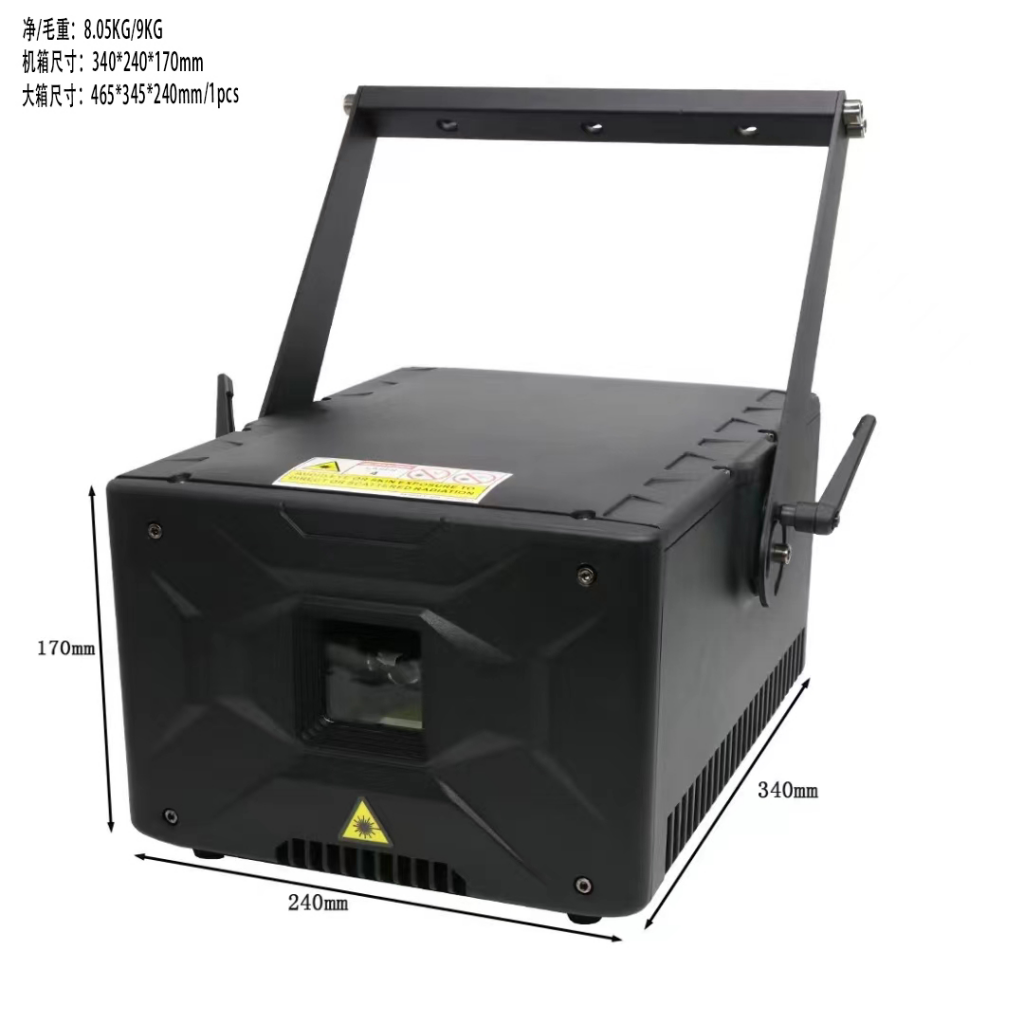
- Animation laser light — draws patterns, text and animation. Indoor units run on AC; DC 12 V battery versions exist, and the Bluetooth versions take phone control.
- Full colour laser light vs single green — a full colour laser light mixes R, G and B and can produce any hue. Single green is one wavelength; at the same rated power it reads brighter in the air, which is why long-throw single-colour light walls are usually green.
- Line-beam performance units — twin-head, four-head and six-head bodies drawing several lines at once, for large bars and shows.
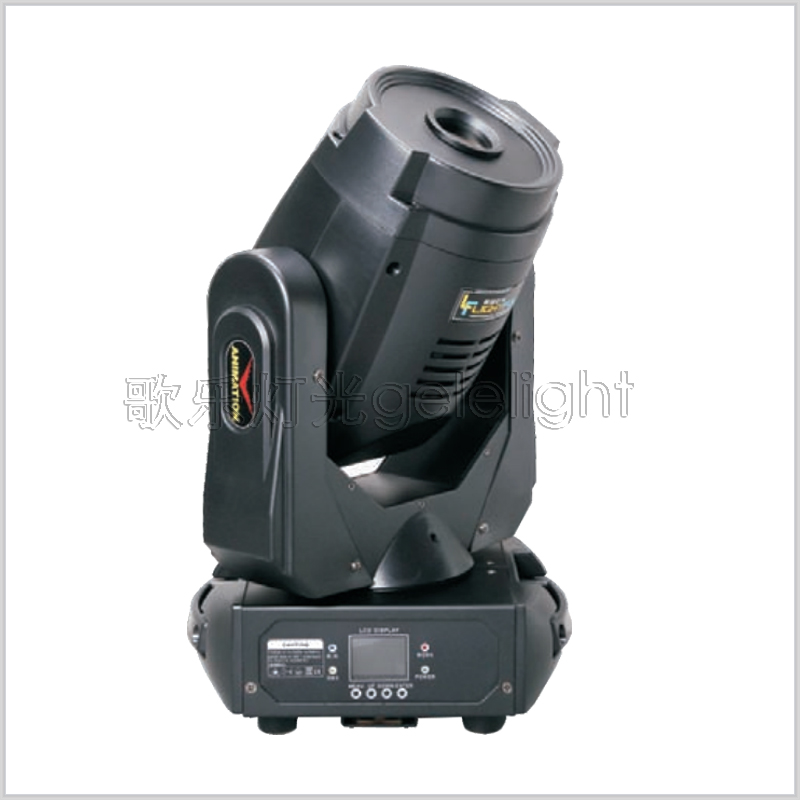
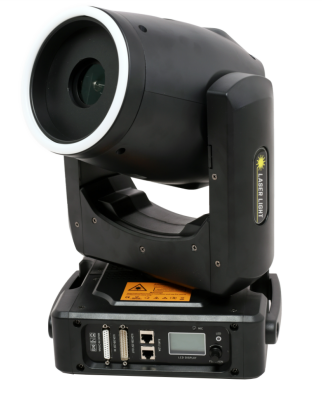
- Moving-head laser — the beam turns. Our own spec sheet states pan 540° and tilt 270°, so you do not have to solve the angle in the rigging.
- Starry-sky units — scatter points. Indoor and outdoor versions both exist; the outdoor version is a sealed, weatherproof build.
- Firefly units — irregular drifting points for trees and planting. Our own spec sheet states the outdoor version at IP66.
- Matrix and swing units — eight-eye and six-eye beam arrays. These build a surface, not a line.
A professional laser show equipment package picks from those six; the rest of this page is about the numbers behind the choice.
3. Indoor and outdoor: an IP rating is a different chassis
Our own spec sheet rates indoor animation units IP20, the 20 W / 30 W / 40 W outdoor waterproof units IP65 — that is the outdoor waterproof laser light tier — and the outdoor firefly unit IP66. An outdoor unit is not an indoor one with a gasket added — the thermal path, the connectors and the optical window are all a different build, which shows up as weight: 14.5 kg at 20 W, 23 kg at 30 W, 27 kg at 40 kg, against 2 kg for a 2 W indoor unit.
One item that gets missed outdoors: the operating temperature range. Our own spec sheet states −20 °C to +35 °C for the outdoor starry-sky unit and −35 °C to +50 °C for the outdoor firefly unit. On a northern winter project that one line decides whether the fixture can be used at all.
4. Control: DMX512 and ILDA are two different roads
- DMX512 — takes channels on a lighting console, which is what makes a DMX laser light. The channel counts stated in our own spec sheet are 16, 16/36, 17/102 and 27. This is the route when the laser is cued with the rest of the rig.
- ILDA — takes show software, the route for an ILDA laser light. Our own spec sheet states compatibility with ISHOW, Pangolin and Phoenix. The outdoor waterproof units and the indoor units from 10 W up carry an ILDA interface.
- Master/slave and multi-unit sync — for several units running one effect. Master/slave needs no console; synchronising with lighting and video needs a shared DMX master or timecode.
- Sound-active, auto and app — for small rooms with no console at all.
Scanner speed (KPPS / PPS) decides whether you can play animation. Our own spec sheet gives 15 KPPS for the entry indoor units, 20 KPPS for the 10 W ILDA model, DT20 KPPS for the line-beam performance units, and “up to 40,000 PPS” on the outdoor waterproof units. Speed and pattern complexity trade off against each other: on one fixture, the more detailed the drawing, the fewer frames per second it can hold. If smooth animation is the requirement, this figure gates you before wattage does.
5. Choosing by venue
- Bars, KTV, private rooms — 2–5 W indoor animation units, no waterproofing, sound-active or DMX.
- Stage laser light — 10–15 W full colour or moving head, and check the pan/tilt range and ILDA.
- Building facade laser work, bridges, hillsides and landmark laser beam projects — 20–40 W outdoor waterproof units, 1,500–2,000 m stated throw, programmed through ILDA.
- Scenic areas and night tourism — several outdoor units cued together. The constraint is “one show file, several units in sync”, not the wattage of any single unit.
- Water screens — the water itself scatters the beam, so power has to be sized from the screen area, not from the throw distance.
- Facade lighting — where the lit surface is large, use several matrix or swing units to build the surface rather than one long-throw unit sweeping it.
6. What the price difference actually is
Six things move the number: the laser power and how it splits across R, G and B; the scanner speed; indoor versus outdoor (the IP rating); whether there is an ILDA interface; how many heads; and the housing and cooling. Two units both labelled 10 W will differ in price when the colour split and the scanner differ. So compare spec sheets, not the wattage on the badge — and ask the laser light manufacturer for the sheet before the price.
Frequently asked questions
Q: How much laser power do I actually need?
A: The distance decides it, not the wattage. In our own spec sheet 10–20 m indoors corresponds to the 2 W tier (60 W at the mains), 80 m to the 5 W moving-head tier (150 W), and 1,500–2,000 m to the 20–40 W outdoor waterproof tiers (300–500 W). Size the electrical supply from the fixture power row — from the laser output and the breaker will trip.
Q: Is an outdoor waterproof laser light a different product from an outdoor laser light?
A: They are two tiers of the same outdoor line. Our own spec sheet rates the 20 W, 30 W and 40 W waterproof units IP65 and the outdoor firefly unit IP66, and the outdoor build is heavier at the same power: 14.5 kg at 20 W against 2 kg for a 2 W indoor unit, because the sealed housing, the thermal path and the optical window are all a different build.
Q: Should a stage laser light run from a console or from show software?
A: Two different routes. To cue it with the rest of the rig, use DMX512 — the channel counts our own spec sheet states are 16, 16/36, 17/102 and 27. To programme the show yourself, use ILDA, which our own spec sheet states is compatible with ISHOW, Pangolin and Phoenix. Several units running one effect need only master/slave, with no console at all.
To get a configuration
Send us the venue type and throw distance, indoor or outdoor, whether it will be cued from a console or from show software, and roughly how many units. That is enough to come back with a configuration instead of a guess.