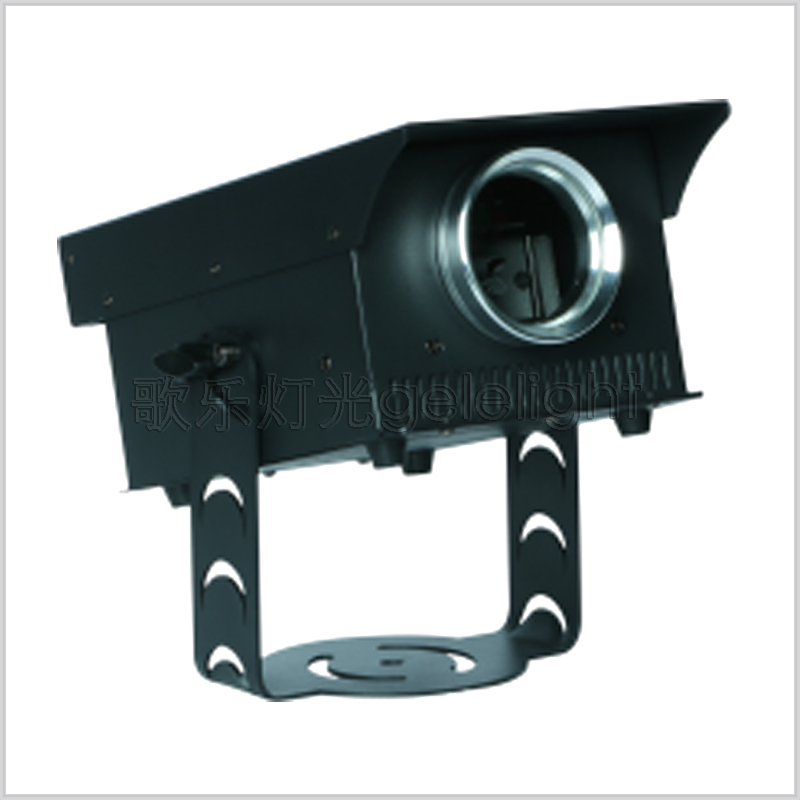
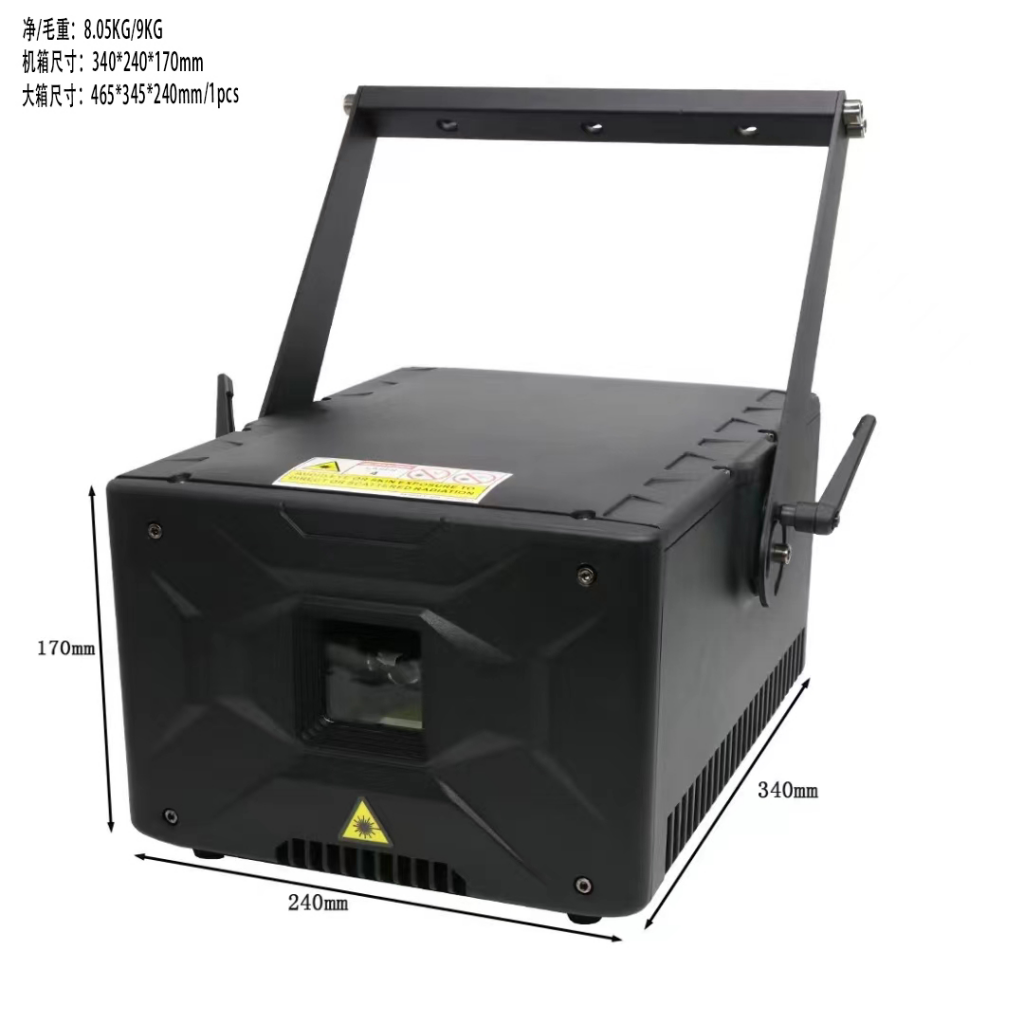
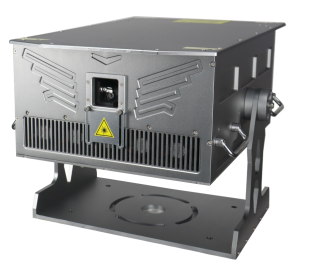
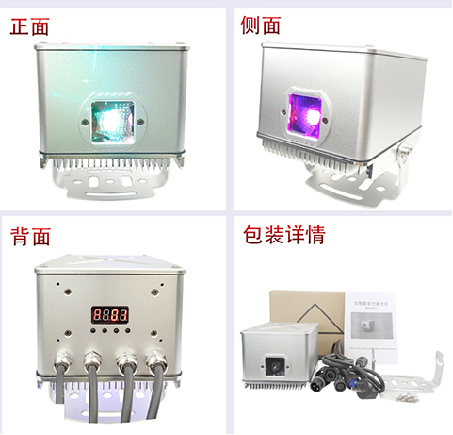
Laser lights (non-moving head)
28 products
A non-moving-head laser light is one with no X/Y motors inside: the projection direction is fixed, and coverage comes either from running several units or from the pattern changing on its own. Its sibling line, laser lights (moving head), adds a motor set so a single unit can sweep the surface, at the cost of more weight and more power. This page covers how to choose within the fixed-projection line. Every figure is read from our own spec sheet and can be checked line by line.
1. Fixed projection versus moving head
The difference is the motor set. On our own spec sheet the moving-head models state 540° on the X axis and 270° on the Y axis; the fixed models have no such figure, and the direction is set by how the fixture is mounted, with pattern variation coming from the pattern wheel and the program instead.
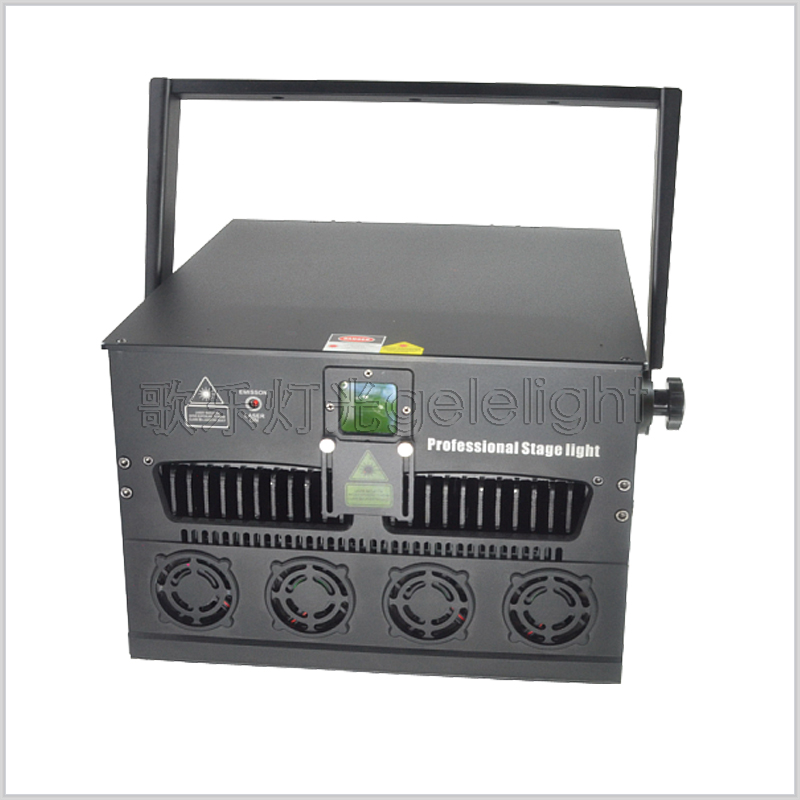
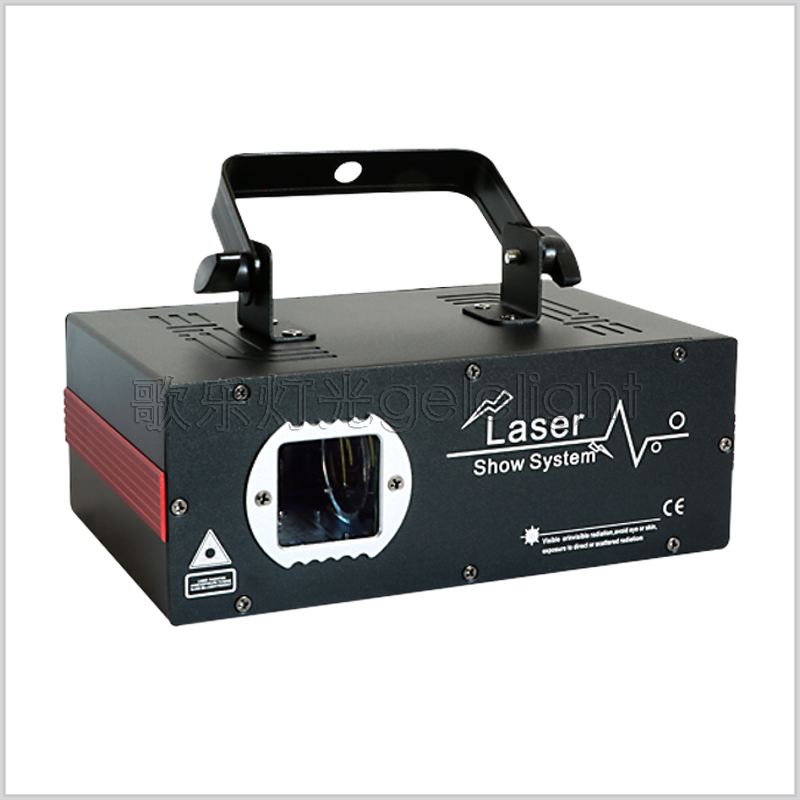
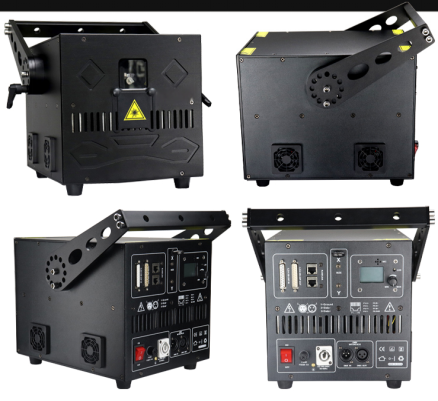
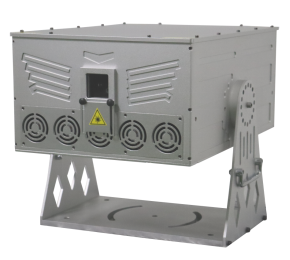
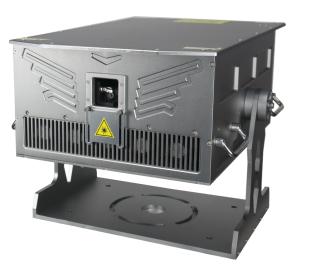
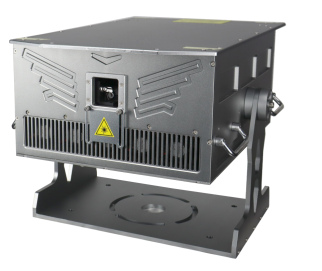
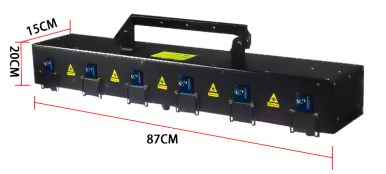
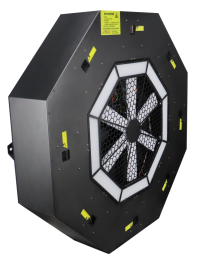
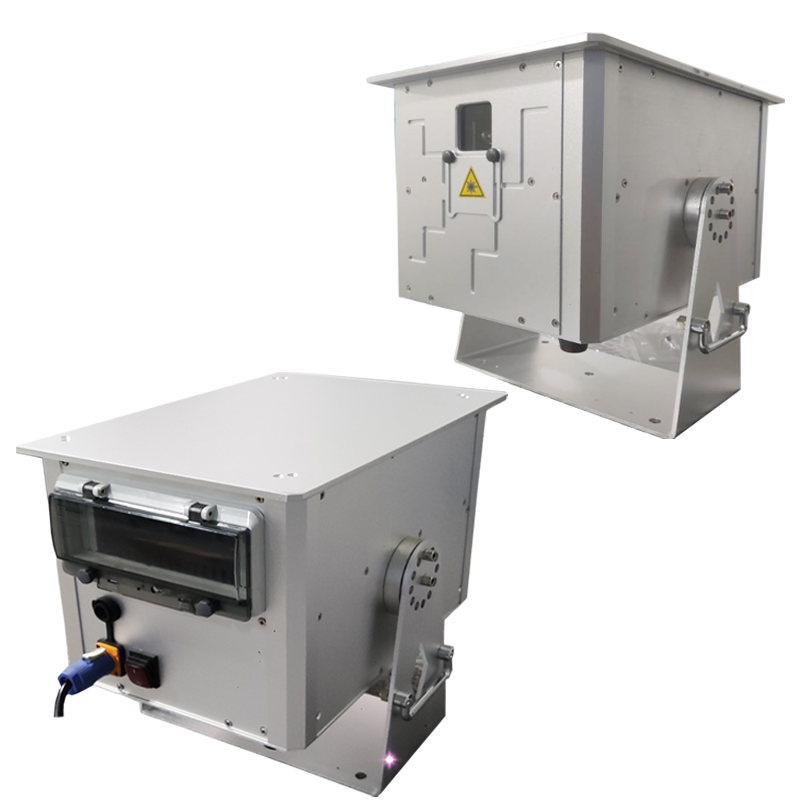
That difference lands on weight and site work. On our own spec sheet a small fixed unit can be 1.25–1.6 kg in a 225×145×90 mm housing; an outdoor waterproof unit comes in at 41×35×29 cm and 14–17 kg; and one multi-head design states 960×170×145 mm at 17 kg. In other words, until the moving-head question is settled, the rigging method cannot be settled either.
2. The wattage in the model name is laser output, not power draw
On our own spec sheet every tier on this line states both the laser power and the fixture power, and putting the two side by side gives the ratio: the 1–3W tier draws 40W, the 20W tier 400W, the 50–60W tier 1000W, the 80W tier 1200W, and the 100–150W tier 1800W.
There is a pattern worth remembering here: the lower the power, the larger the ratio. The 1–3W tier sits somewhere between 13× and 40×, because the power supply, control board and cooling are fixed costs that do not shrink on a small fixture; above 80W the ratio narrows to 12–20×. So estimating one tier’s draw from another tier’s ratio does not work — every tier has to be read from its own row in our own spec sheet.
On site this is direct: sizing the supply from the model name will trip the breaker, and the cooling has to be sized from the fixture power as well. Quotes have to state whether the figure is laser output or fixture draw; a single bare number leaves the two sides measuring different things.
3. Full colour, single green, and how the power is split
On our own spec sheet the full-colour models state their power split across the red, green and blue channels. Across one series the ratios are visible in full: the 30–40W tier is red 8W, green 10W and blue alongside; the 50W tier is R-15W, G-15W, B-20W; the 60W tier is R-18W, G-17W, B-25W; the 80W tier is R-24W, G-30W, B-28W; and from the 100W tier upward it becomes R-30W plus a combined green-blue module, with the 150W tier at R-40W plus that module.
Two things follow. First, the three channels are not split evenly — blue usually gets the most and red the least, because blue is the least efficient channel in this generation of laser. Second, the green-blue combination module appears from the 100W tier up, so higher power tends toward modular construction. Neither point affects electrical sizing — that still comes from the single fixture-power row.
4. What the outdoor waterproof models add
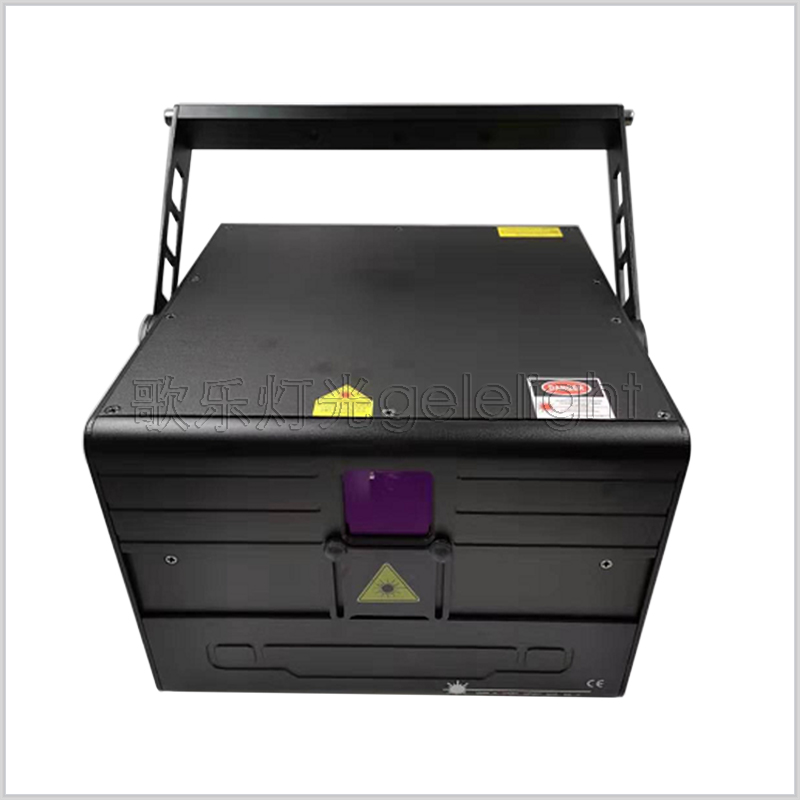
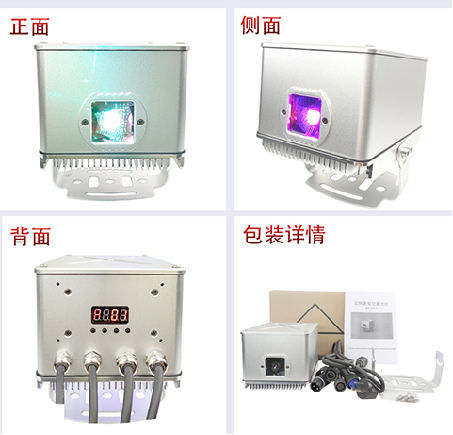
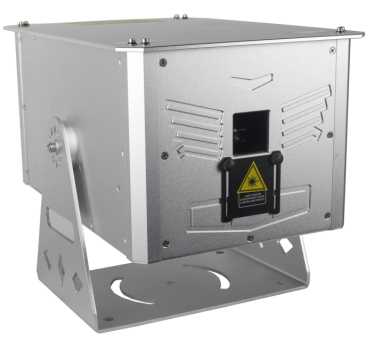
On our own spec sheet this line has both indoor and outdoor models, and they are read differently. Indoor models state an ambient temperature range only (one reads 10°C to 35°C, dry and low-dust) with no protection rating; outdoor models state a protection rating, an operating temperature range and an internal thermostat. The outdoor waterproof tier measures 41×35×29 cm at 14–17 kg, clearly larger than the small indoor units — part of those kilograms is the housing itself.
Starry-sky and firefly effect lights sit at the other extreme. On our own spec sheet an waterproof unit on this line is 1.6 kg in a 225×145×90 mm housing, and its throw distance reads ≥10 m. Fixtures like this spread points and cover area rather than throwing far, so quantity is worked out from the area to be covered, not chosen by wattage.
Multi-head designs deserve a note of their own. Our own spec sheet lists one model with six laser heads in a single housing. What that buys is one unit covering six directions — it saves rigging points and cable runs, not electricity, because the electrical reading is still the fixture-power row.
5. Control and patterns
Our own spec sheet gives these figures: DMX512 channel counts of 12CH, 17CH, 21CH and 25CH depending on model; galvo scan rates of 25K, 30K and 40K PPS, with one waterproof model stating 45000 PPS; pattern banks of over a hundred built-in effects; and control modes covering sound activation (with blackout), auto, master-slave and PC software, with an ILDA interface for offline playback. The pattern functions listed are broken line, strobe, rotate, move, roll, split, gradual draw, colour change and size change — confirm these by name, because they are not on every model.
Indoor and outdoor models use the same control system; the difference is that the outdoor versions need waterproofed connectors and a sealed housing. Do not carry an indoor wiring arrangement straight into an outdoor installation.
6. Choosing by venue
- Plazas, building facades, bridges — mid to high power tiers. Fix the throw distance and the area to be covered first, then the power; outdoors, size the fixture draw, the mounting and the surge protection together.
- Scenic areas and night tourism — several fixed units with pattern variation is the most economical approach; only bring in moving heads where the beam genuinely has to sweep.
- Water screens and fountains — measure throw distance and target surface size first, and settle power afterwards.
- Bars, karaoke and entertainment venues — a small full-colour unit is enough; look at pattern count and galvo speed.
- Starry-sky and firefly ambience — work out unit count from the area to be covered; the ≥10 m throw class suits low ceilings and tree canopies.
To get a configuration
Send us the throw distance and the area to be covered, indoor or outdoor, single green or full colour, how many units will run together, how much power the site can supply, whether a console or laser software is involved, and the rigging conditions (fixed projection, or must it move). That is enough to fix the tier and the fixture draw, and to come back with a configuration and an electrical recommendation.