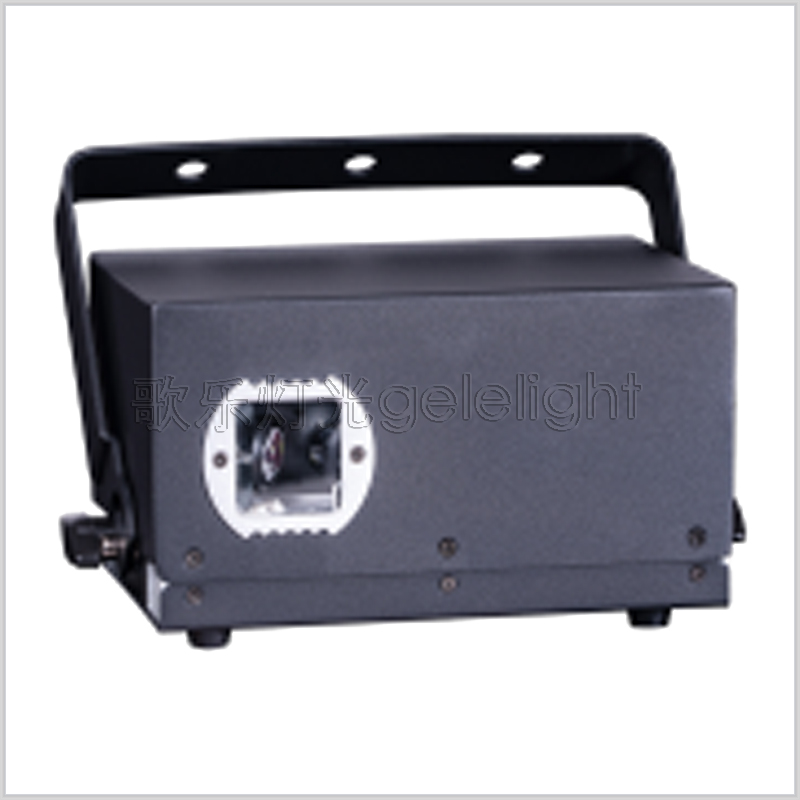
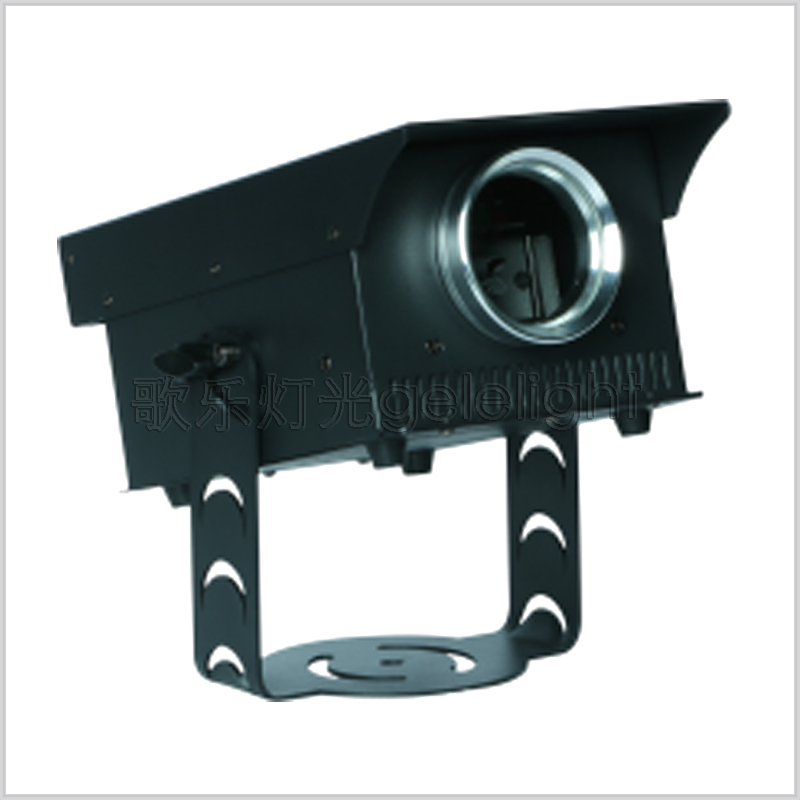
Waterproof laser starry lights
2 products
A waterproof laser starry light spreads a field of points across a ceiling, a canopy or a stand of trees. It does not wash an area and does not throw a landmark beam, so it is chosen differently from outdoor landmark lasers or laser lights (non-moving head) — those two are chosen by range and by area. This one is chosen by the area to be covered and by where it can be mounted. Every figure is read from our own spec sheet and can be checked line by line.
1. The figures that decide the effect are throw distance and scan angle
How a starry light looks is set by how densely the points land on the target surface. On our own spec sheet the waterproof model states a throw distance of ≥10 m and a scan angle of 180°. Those two figures together give the coverage: whether the distance from the mounting point to the ceiling reaches 10 m decides whether you get a sky of stars or a handful of them.
So the order is: measure the distance from the mounting position to the target surface, then decide how many units. Adding power does not help when the distance is short — power buys brightness, not spread.
2. The wattage in the model name is laser output, not power draw
Our own spec sheet is explicit here: the indoor 2W tier states a rated fixture power of 20W, and the waterproof 1–3W tier states 40W. The model name carries the laser output; the fixture draws several tens of times that.
The more useful reading is the comparison between those two rows. At the same nominal 2W tier, the waterproof version draws twice the fixture power of the indoor version. What is added is not laser power but the sealed housing, the waterproof glands and the cooling that goes with them — all necessary outdoors, but it means both selection and electrical sizing run off the fixture-power row, not the model name. One unit budgeted at 40W, ten units in one zone is 400W, and beyond that it needs its own circuit.
3. The waterproof layer is what decides whether it can go outdoors
On our own spec sheet the indoor and outdoor versions read differently. On our own spec sheet the waterproof model states a protection rating of IP68 with an ambient range of −20°C to +35°C, with a colour temperature of 5500K and a choice of pure white or colour light sources (red, green and blue given separately). The indoor model states no protection rating.
Three things need confirming by name, because they are not the same on every model. First, the protection rating: in our own spec sheet IP65 and IP68 are two different things, the former against water jets and the latter allowing brief immersion. Second, the light source colour: pure white and colour are different configurations and the model name does not show which. Third, source life: our own spec sheet states 8000 hours for this starry model against 10000 hours for others on the same line, so a permanent installation in a canopy or a high ceiling should have its replacement cycle worked out up front.
4. Laser safety is not something a spec sheet settles
Our own spec sheet states the laser class and the beam parameters. But the mounting height, how close an audience can get, whether the beam can reach an eye, and whether an exclusion zone is needed are verified by qualified professionals under local requirements; we do not issue conclusions on a site’s behalf. On a scenic area or a public plaza, this step belongs in the plan before purchase, not after installation.
What the specification can supply is the input: throw distance, scan angle, beam divergence, protection rating. What belongs in the plan is “where the fixture is mounted, which way it points, how many metres from people” — not “this fixture is safe”.
5. Control
On our own spec sheet the control options on this line are DMX512 (terminal or network port), sound activation, auto and master-slave synchronisation, with the waterproof model also stating a start-up time within 0.5 s. Two arrangements are common on starry projects: several units in master-slave synchronisation producing one sky, or DMX zoning so different areas run different effects.
What has to be settled early is how many fixtures one controller drives and how the cable runs. Starry lights often sit on canopies, pergolas and roofs, so the cable routing and the waterproof glands belong in the plan — they should not be improvised on site.
6. Choosing by venue
- Scenic areas, park canopies — many units, low power tiers, quantity from the area to be covered; the priorities are the protection rating and concealing the cable runs.
- Domes, pergolas, roofs — measure the distance first; only a generous distance lets the points spread, and where distance is short choose a wider scan angle.
- Waterside and fountain surroundings — go to a higher protection rating, seal the housing and glands, and account for reflection off the water.
- Indoor ambience and private rooms — the indoor model is enough; there is no reason to pay twice the fixture draw for waterproofing you do not need.
To get a configuration
Send us the distance from the mounting position to the target surface (ceiling, canopy, roof), how much area has to be covered, indoor or outdoor, pure white or colour, and roughly how many control zones you want. That is enough to fix the unit count and the power tier, and to come back with a configuration and a wiring recommendation.